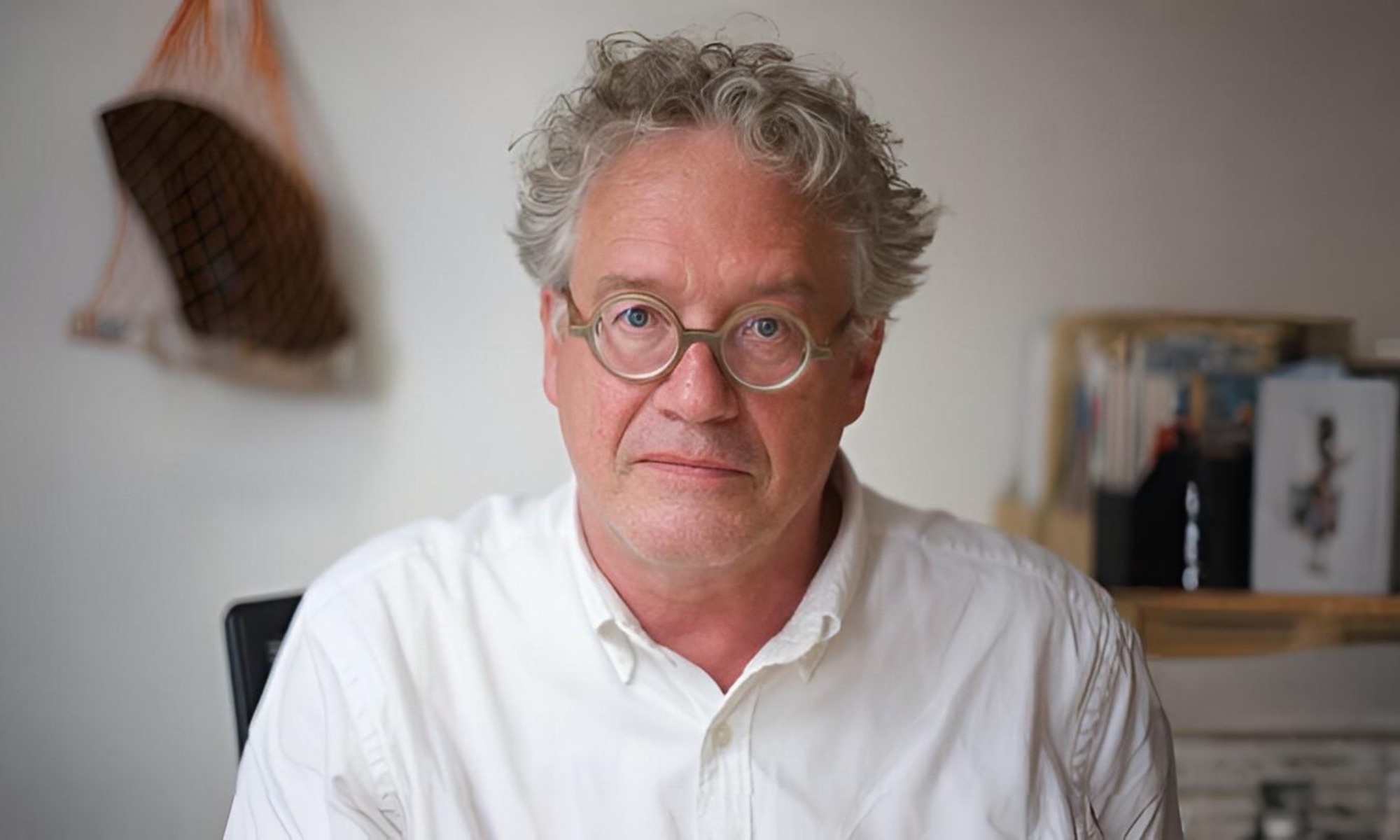
Conversation with Jonathan Watkins, Independent Curator and Former Director of Ikon Gallery
I had the pleasure of speaking with Jonathan Watkins about his distinguished curatorial career, his long-standing engagement with contemporary Japanese art, and the changing landscape of international exhibition-making. Our conversation ranged from his exhibitions—including Facts of Life: Contemporary Japanese Art—to the evolution of contemporary artistic practice in Japan, the legacy of the post-war avant-garde, socially engaged art, and the shifting relationship between local contexts and the global contemporary art world.
Jonathan is an independent curator and writer. He served as Director of Ikon Gallery, Birmingham, from 1999 to 2022, where he established an international programme of contemporary art exhibitions with a particular emphasis on artists from Asia, including Japan. Previously, he was Director of the Chisenhale Gallery in London, Curator at the Serpentine Gallery, and Artistic Director of the 1998 Biennale of Sydney. Watkins has curated numerous internationally significant exhibitions, including Facts of Life: Contemporary Japanese Art (Hayward Gallery, 2001), and has worked extensively with leading Japanese artists such as On Kawara, Atsuko Tanaka, Tatsumi Orimoto, and Shimabuku. His publications include the monograph On Kawara (Phaidon), and his curatorial practice has consistently explored the philosophical, social, and cross-cultural dimensions of contemporary art.
Keith Whittle (KW): Thank you for agreeing to speak with me. To begin, could you outline your professional background, including your time as Director of Ikon Gallery and your current work? I’d then like to explore your long-standing engagement with contemporary Japanese art and how your curatorial approach has developed over the course of your career.
KW: Over the past three decades, you have curated numerous exhibitions and written extensively on Japanese art. Projects such as Facts of Life: Contemporary Japanese Art (Hayward Gallery, 2001), Tatsumi Orimoto: Bread Man (Ikon Gallery, 2001), On Kawara: Consciousness. Meditation. Watcher on the Hills (Ikon Gallery, 2002), co-curated Kitagawa Utamaro: Ukiyo-e Prints (Ikon Gallery, 2010), and Atsuko Tanaka: The Art of Connecting (Ikon Gallery, 2011) reflect a sustained commitment to presenting Japanese art to international audiences.
Could you tell me how your interest in Japanese contemporary art first developed? More broadly, what has drawn you to Japan, and to Asian art more generally, throughout your career?
Jonathan Watkins (JW): I had been aware of contemporary Japanese art for some years, long before I went to Japan. When I was the director of Chisenhale Gallery, I did an exhibition with Yoko Terauchi. That was in 1994. And at the Serpentine, I worked with Kawamata, whose work I saw at Annely Juda Fine Art Gallery in London and was completely bowled over by it. Then I left the Serpentine in 1997 and was appointed artistic director for the 1998 Biennale of Sydney. That was a wonderful opportunity for me to undertake research, to travel to parts of the world that I hadn’t visited before, especially those closer to Australia, particularly in South East Asia and Japan, China, and Korea. I included a number of Japanese artists in the Biennale that I have worked with subsequently, developing long term relationships with some of them, such as On Kawara, Kawamata and later Shimabuku who I also showed at Ikon – a big survey of his work. So my deepening interest in Japanese art started in 1997, and continues to deepen. It’s interesting to me how much Japanese art appeals to me. As a curator, I want to make exhibitions of work I like, which is not to say that I am not critical, but you know, critical conversation has to be around something one wants to engage with…
KW: In 2001, you co-curated Facts of Life: Contemporary Japanese Art, then the largest exhibition of contemporary Japanese art held in the UK. I remember it as a remarkably understated exhibition, standing in marked contrast to the Neo-Pop discourse that had come to dominate international perceptions of Japanese contemporary art.
By that point, Japanese contemporary art had become widely framed through the lenses of popular culture, technology, manga, anime, and consumerism. While these were undeniably significant developments, they represented only one current within a far more diverse and complex artistic landscape. Facts of Life, by contrast, offered a more measured and expansive reading of contemporary practice, bringing together artists whose work engaged with the textures of everyday life through subtle, conceptually rigorous, and often quietly poetic means.
Was this a conscious attempt to challenge prevailing international narratives of Japanese contemporary art, or did the exhibition simply emerge from the artists and practices you found most compelling during your research?
JW: It was the Japan Festival. The reason why I was asked to do that was that I’d recently arrived back in the UK and reconnected with the Hayward, people who I knew there who were looking around for a curator to do a show for the Japan Festival that had been booked in some years previously. They accepted my proposal, developed out of the proposition of my Biennale in Sydney, that focused on everyday reality rather than Japanese postmodern weirdness.
KW: Although I didn’t see the Sydney Biennale firsthand, reading about it and later seeing Facts of Life at the Hayward, I was struck by the continuity between the two exhibitions.
JW: Basically, what I was doing was taking the same basic argument and applying it to one particular corner of the art world. I was not so interested in art about art, or artists obsessed by their artistic identity; neither those artists whose practice is centered on their national identity. Another thing perhaps is that I was coming from a place still quite obsessed with the YBA phenomenon. There was a kind of nationalism in the air here that I was resisting.
KW: Would it be fair to say that Facts of Life was not proposing an alternative canon so much as advocating for a more pluralistic understanding of artistic practice in Japan at the turn of the twenty-first century?
JW: I would say the latter…
KW: A similar approach seems evident in the second Tate Triennial, Days Like These (2003), which you co-curated with Judith Nesbitt. As with Facts of Life, the exhibition appeared to move beyond the more familiar names dominating British contemporary art at the time in favour of a broader and less predictable selection of artists.
Was that a conscious curatorial strategy?
JW: Yes, exactly, I have always have been interested in something slightly quieter, or a little less obvious or less theatrical. At the same time, it is important that one sort of mixes things up, at least to keep the attention of one’s audience. I didn’t want to go down the Superflat road. It was playing on a kind of exoticism, often very much with foreign markets in mind. I wanted to tell an alternative story, falling in with Oscar Wilde’s proposition, which is that Japan is very ordinary place rather than spinning a story of weirdness that previous exhibitions had done. For example, the particularities, or peculiarities, of Japan were very much the focus of “Against Nature: Japanese Art in the Eighties,” the show that Thomas Sokolowski did with Kathy Halbreich in the US.
KW: Oscar Wilde’s proposition that, “Japan” is, in many respects, an aesthetic and cultural construction rather than a fixed reality continues to resonate. The international fascination that accompanied Japan’s economic ascendancy in the late 1980s, and the prominence of Japanese contemporary art throughout the early and mid-1990s, has since given way to a markedly different cultural landscape. Over the past two decades, the centre of gravity has shifted, with China and South Korea emerging as influential centres of artistic production, institutional investment, and market attention. Against this backdrop, Japan no longer occupies the singular position it once held within the international imagination, prompting renewed questions about how Japanese contemporary art is understood, represented, and valued today.
As Mami Kataoka noted to me, Japan’s contemporary art ecosystem remains comparatively modest in scale, particularly when measured against its regional neighbours. How do you see Japan’s place within today’s global art world? Has its international visibility diminished, or has it simply become less dependent on the narratives of cultural exceptionalism that once shaped its reception?
JW: No, except that the radar moves on, and a certain kind of fatigue sets in. But also, that the explosion of interest in Japan coincided with an economic bubble, and then the bubble burst and various manifestations of Japanese culture – even Japanese tourists! – were no longer so much in evidence in the wider world. Meanwhile in China the policies of Deng Xiaoping started to really take effect, and the rest is an extraordinary ongoing story, not the same as Japan’s. Japan had a very strong relationship with America in a way that distinctively different from what is going on with China. China is huge. The correspondence between Chinese and Russian art worlds is sort of more pertinent. In a way the “Fuck Off” exhibition in China (2000), Neo-pop strategies and cathartic performance art are reminiscent of what went on in Russia during the 1980s and 90s. There has been a kind of violence in Chinese work that is likewise to do with wanting to escape the shackles of a totalitarian regime.
KW: One of the most noticeable changes in Japan’s contemporary art scene over the past few years has been a generational shift. A younger cohort of galleries, including The 5th Floor, Parcel and others, seems less interested in presenting artists through a distinctly “Japanese” lens and more focused on placing them within wider conversations around labour, ecology, migration, gender and digital culture. The 5th Floor, in particular, exemplifies this approach, with a programme centred on emerging and mid-career artists, interdisciplinary practices and critical discussion rather than simply following market trends. It has also become an important gathering place for younger curators, artists and international visitors. Outside Tokyo, regional biennials and art festivals continue to grow in importance, with many artists moving between commercial galleries in the capital and long-term community-based projects across Japan. At the same time, Tokyo Gendai has helped reconnect Japan with the international art market, bringing major overseas galleries and collectors to Tokyo while giving Japanese galleries greater global visibility. Another significant development is the rise of smaller, independent galleries in neighbourhoods such as Kiyosumi-Shirakawa, Bakurochō, Kagurazaka and parts of Shibuya. Rather than focusing solely on selling art, many of these spaces also host performances, talks and publishing projects, creating more open, experimental and discursive platforms for artists and audiences alike.
So rather than competing directly through the commercial market, Japan has developed distinctive models, including cultural patronage centred on long-term initiatives, regional revitalisation, and site-specific commissions, exemplified by Benesse Art Site Naoshima. Do you see this as one reason why socially engaged and relational practices have flourished in Japan, developing less as a rejection of modernism than as a continuation of earlier artistic traditions?
JW: I don’t know, but I wouldn’t be surprised if that were the case. The Japanese art world isn’t one in which relational practice is simply a repudiation of modernist tradition – and the notion of the artwork as a discrete gesture – but it is arguably a continuation of an earlier tradition. That’s my line. I think probably that is one of the reasons why I am particularly interested in art from Asia. There is an ethos there that appeals to me. It seems more humane, less religious or pseudo-religious.
KW: You have also worked extensively in China, serving on the curatorial team of the Sixth Shanghai Biennale and curating the theme exhibition of the Fourth Guangzhou Triennial. Having worked closely with artists in both countries, how do you understand the different trajectories that Japan and China have followed over the past two decades? To what extent have differences in their markets, institutions, and models of patronage shaped the international visibility of their contemporary art?
KW: Returning to Japan, one of the striking features of contemporary practice is the continuing influence of the post-war avant-garde. Artists such as Yuken Teruya, Yuki Kimura, Koki Tanaka, Meiro Koizumi, and Chim↑Pom from Smappa! Group all engage, in different ways, with performance, participation, intervention, and the relationship between art and everyday life. To what extent do you see these practices as continuing the legacy of groups such as Gutai, Hi Red Center, and Mono-ha? Is this a genuine lineage within Japanese art, or does it represent a fundamentally new response to contemporary social and political conditions?
JW: Yes, there is a significant continuity. You see it in the work of Kawamata, for example, a “relational” kind of work. It was there before Nicolas Bourriaud wrote Relational Aesthetics, and he could have picked up a little bit more on the Asian side of things I think, internationalised his inquiry, looking more at people like Navin Rawanchaikul, Shimabuku, Tadasu Takamine, Makoto Nomura – and further back, to the Gutai artists. Around the time I was doing the Sydney Biennale, Junichi Shioda then at MOT in Tokyo, made an exhibition called “The Gift of Hope”. It was all very much about exchange, collaboration and engaging with audiences. I was picking up on that, much more than previously, the work that was breaking down the division between the artist as producer and audience as consumer. I found that quite exciting. And I think partly that is why I want to do the exhibition of Shimabuku, a major exponent of that relational tendency. His work is not so exciting to the art market and certainly he doesn’t make as much money as Murakami, but as a cultural phenomenon, he is equally interesting if not more interesting.
KW: One development that has struck me since the early 2000s is the renewed emphasis on the relationship between artists and their publics. Increasingly, younger Japanese artists seem to connect their practice with wider social, political, and ecological concerns. Do you see this as a lasting shift away from market-driven artistic production, or is it a more contingent response to contemporary conditions? How sustainable do you think this model is?
JW: It sits outside of the market, and it’s difficult to sustain…
KW: I agree.
JW: It is though an interesting phenomenon and reflects the tendency in Asian cultures – pervasive before European Japan’s increasing contact with the West during the nineteenth century transformed its artistic and cultural landscape – not to treat art works as discrete objects. And cultural memory is not so short. There hasn’t been such an established obsession in Asia with the discrete art object produced by a sensitive “artist” genius in the same way there has been in the West. It was much more about shared experience. Now we show Ukiyo-e on walls, framed and glazed, but it was originally made for people to collect and they enjoyed passing it around, sharing amongst groups of friends and acquaintances.
KW: Your comments remind me of conversations I’ve had with Fram Kitagawa, most recently when I invited him to deliver a keynote lecture in Ireland. Like you, he sees artistic practice less as the production of autonomous objects than as a catalyst for social relationships and civic engagement. His work on the Echigo-Tsumari Triennale reflects that philosophy. Do you see Kitagawa’s approach as part of the same broader tendency you’ve been describing?
JW: I believe so.
KW: I was recently flipping through my copy of the catalogue for Bye Bye Kitty: Between Heaven and Hell in Contemporary Japanese Art, curated by David Elliott. I had the pleasure of working with the Japan Foundation to bring David to the University of the Arts London to speak about the exhibition, so revisiting the catalogue brought back memories of that event. As the title suggests, Bye Bye Kitty sought to move beyond familiar stereotypes of Japanese contemporary art, exploring themes such as anxiety, spirituality, memory and social dislocation through the work of contemporary artists. Looking back, Bye Bye Kitty successfully challenged the dominance of Neo-Pop and “Cool Japan” by foregrounding a more critical and introspective generation of artists.
That is a strong question. I would make one small stylistic adjustment to avoid sounding as though you’ve already answered it.
Yet, then as now, the exhibition appears to have been shaped by the anxieties of the late Heisei period, presenting a vision of “Dark Japan” rather than “Cool Japan.” Looking back nearly two decades later, do you think its central thesis still offers a useful framework for understanding Japanese contemporary art, or has the field become so diverse, transnational, and internationally connected that it now demands a different interpretive model?
JW: Again, I’m not particularly qualified to talk about it. But certainly it is the kind of attitude I like to encounter. It’s very interesting that David Elliott was the curator of such a show, after his experience. I envy him! How rare to have someone like him from abroad to be the director of a major museum like Mori Art Museum.
KW: I agree. Japan can sometimes appear institutionally cautious, which is why David Elliott’s appointment as Director of the Mori Art Museum felt so significant.
David remains the only non-Japanese director of a major Japanese art museum, reflecting the rarity of foreign leadership in Japan’s museum and cultural sector. His appointment appears to have been exceptional, perhaps because museum directors are typically drawn from within Japan’s own museum, academic, and cultural institutions, where language, institutional knowledge, and long-established career pathways are highly valued. That said, non-Japanese curators, researchers, and advisors have become more visible within Japan’s museum and exhibition sector, particularly through collaborative exhibitions, research projects, and international art festivals, even if museum leadership remains overwhelmingly Japanese.
JW: Yes, I think he had a 5 year contract and well, it could be said that Japan has reverted to type, foreign influence is excluded and now we have more homogeneity within such an institution. Certainly, the Japanese art scene is not booming and a lot of Japanese artists live abroad and, like Shimabuku, don’t particularly want to go back. They’re feeling is that the country is rather insular without much room for a freedom of expression.
KW: I agree.
JW: I do wish I could spend more time in Japan doing research. Usually, I’m there for only a few days rather than several weeks, often to promote projects I’ve produced elsewhere, such as the Tanaka exhibition. *Facts of Life* was over twenty years ago now, but I’d like to think it still has some relevance.
KW: In recent years, artists in Japan have responded in diverse ways to the social, ecological, and emotional aftermath of Fukushima, while there has also been a growing engagement with Japan’s colonial past in Korea, Taiwan, Manchuria, and the Pacific—histories long marginalised in both national and international narratives. Many artists now function as counter-historians, reclaiming suppressed histories through personal, performative, and affective practices. Rather than treating empire as a closed historical chapter, they reveal how colonial legacies continue to shape language, identity, gender, memory, and geopolitics. Yoshiko Shimada, for example, interrogates the complicity of Japanese women in imperial projects; Jane Jin Kaisen explores Korean memory through the intertwined histories of Japanese and U.S. imperialism; while Meiro Koizumi and Fujii Hikaru examine inherited guilt, privilege, and collective amnesia. How do you view this renewed artistic engagement with Japanese colonialism? Do you see these practices primarily as acts of historical recovery, or as critical reflections on the ways the colonial past continues to shape contemporary identities, politics, and cultural memory?
JW: A very timely question, as I recently met Meiro Koizumi in Tokyo to talk about his forthcoming exhibition at the Daiwa Foundation, London. His work, like that of Fujii Hikaru, is as brave as it is smart, especially given prevailing attitudes of “Japanese-ness” in Japan. It would be wonderful if his video installation Angels of Testimony — so effective in its deadpan representation of horrific war crimes — could be shown officially in Japan.
Such work is much more than historical as it challenges a xenophobia — a racism, even — that informs everyday life for many in Japan today. At a political level, given the demographic crisis that the country is facing, the kind of truth and reconciliation that these artists are calling for is vital.
KW: In 2007, you curated Still Life: Art, Ecology and the Politics of Change for Sharjah Biennial 8, an exhibition that addressed the growing social, political, and environmental challenges arising from rapid urban development, political and economic ambition, and the unsustainable exploitation of natural resources. In Japan, following the Fukushima Daiichi nuclear disaster in 2011, artists, thinkers, curators. and communities responded to its continuing ecological, social, and emotional repercussions. An example of such is Don’t Follow the Wind, an exhibition initiated and curated by Chim↑Pom, in collaboration with other artists and curators including Kenji Kubota, Jason Waite, and Eva and Franco Mattes.
More recently, in the work of Kyunchome, whose practice I curated in a solo exhibition in the Republic of Ireland, where they explore questions of oceans, ecology, and the interconnectedness of human and non-human life.
More than any other singular event of this century, Fukushima represents a threshold—a moment when the interconnectedness of technology, nature, and human life became unavoidably visible. Here, artistic practice operates within a broader field of ecological thinking: as a means of sensing the invisible, caring for damaged environments, and imagining futures beyond catastrophe. It explores how art can mediate between trauma and renewal, contamination and coexistence, and the local and the planetary.
How can artistic and ecological practices reimagine life, care, and coexistence in the aftermath of events such as Fukushima, when the boundaries between the natural, the technological, and the human have become increasingly blurred, and political and global priorities often appear divergent or in conflict?
JW: It’s interesting that you should reference the 2007 Sharjah Biennial, as in the company of the other curators involved I probably stood out as the sceptical one. That is to say, I doubted then, as I still doubt, that art will make much difference to political and global agendas. Artists, and curators, too often are messianic!
Still, that doesn’t mean that artists should not join in the conversation about — very arguably —the most pressing issue of our time, and it’s almost unimaginable that a large international exhibition nowadays wouldn’t at least touch on the subject of environmental catastrophe. My 2019 Quebec City Biennial, including Japanese artists On Kawara, Shimabuku and Noguchi Rika, was pertinently entitled “Large Against the Sky, Small Between the Stars”. It also involved a number of First Nation artists, and certainly they tend to be ecologically inclined, more tuned into ideals of care and coexistence. My last exhibition as director of Ikon Gallery (2022) was an installation by Ainu artist Myunkiki, and that meant a lot to me.
By the way and for the record, concerning artistic responses to Fukushima, I think ChimPom’s PIKA! (2008) was a masterstroke.
KW: As you suggest, it anticipates many aspects of the group’s practice after 3.11, particularly their engagement with catastrophe, collective memory, and public participation. It became one of the most widely discussed examples of socially engaged and interventionist contemporary art in Japan, while provoking intense criticism that culminated in the cancellation of their exhibition at the Hiroshima City Museum of Contemporary Art. Though controversial, their work should be understood as more than simply an act of provocation.
KW: Looking again at institutional developments, at Central Saint Martins I established a collaboration with Tokyo Geidai that led to the Global Art Practice programme, designed to foster cross-cultural exchange and explore the relationship between local and global contemporary art. More recently, the National Center, Tokyo established its Department of Global Contemporary Art. Yet both initiatives arrived relatively late, given that globalisation has shaped artistic practice and education for decades. By contrast, neighbouring countries developed internationally oriented programmes earlier and now host major events such as Art Basel Hong Kong and Frieze Seoul.
Does this reflect a more persistent inward-looking orientation within Japan? To what extent has this limited the country’s participation in international networks, exhibitions, and educational programmes, and contributed to a relative decline in its global artistic and cultural visibility?
JW: Certainly Japanese artists do not loom so large now on the world stage, as they did say in the 1980s and 1990s, and that is most probably a long-term legacy of the bursting of the economic bubble in the late 1980s. China, and to some extent, Korea then moved into the geopolitical space that Japan vacated. India too. Still, these things are not so black and white and the fickleness of fashion also has had a part to play. The spotlight of the art world is always moving on …
In general, there is an inward-looking tendency across the board of the international art world, a kind of backlash against globalisation which is as evident now in the UK as it is in Japan. Sometimes it is rationalised according to an environmental agenda, but on the whole I think it reflects geopolitics. Movement across the world is more difficult these days, for a variety of reasons, and this is reflected in lists of artists.
It is not inconceivable that the pendulum will swing back — away from nationalisms and localisms — and outlooks will become more international again. Let’s hope that we won’t need another world war for such a reset.
KW: The last time we met in Tokyo, we discussed the work of On Kawara, specifically The Bathroom Series (1953–54, Tokyo), which is part of the collection of The National Museum of Modern Art, Tokyo. We also spoke about the exhibition On Kawara: Consciousness. Meditation. Watcher on the Hills (2003), which you curated, as well as your monograph On Kawara (Phaidon), both of which emphasise the meditative and existential dimensions of his practice.
On Kawara’s art, fundamentally concerned with being in time, becomes a disciplined act of attention—a witnessing of the passage of time and of human presence itself. For you, as someone who approaches art as a form of philosophical inquiry, Kawara’s practice exemplifies how art can serve as a sustained act of awareness rather than conventional expression.
How do you see Kawara’s quiet, repetitive approach to marking time speaking to our contemporary condition, in which our experience of time feels increasingly accelerated, fragmented, and digitally mediated?
JW: Speaking of world wars, On Kawara’s practice was shaped largely by his experience of WW2 and post-war Japan. His was an existentialist practice that made sense of him being “still alive” and proactive despite the chaos and absurdity that he had witnessed, and he carried on in that vein. He renounced nationalism — it’s bad faith! — asserting himself as a citizen of the world.
On was preoccupied by the nature of human consciousness, and an apprehension of time passing is therefore essential. I don’t think his work was intended as an antidote to the nature of modern life so much as an expression of the human condition that remains constant throughout history. He paid close attention to current affairs and had lots to say about it — also I easily imagine him being interested in the work of artists such as Metro Koizumi and Fujii Hikaru — but his forte was philosophical abstraction. Of course, incidentally, that in itself provides a bulwark against the slings and arrows of an increasingly fragmented, accelerating society.
Concerning representation — digital, or otherwise — my 1998 Biennale of Sydney was intended to convey an aspiration to direct, unmediated, experience and On certainly chimed in with that. He certainly liked the title: “every day”
KW: One final question: what exhibitions, publications, or other projects are you currently working on, or planning for the future?
JW: As it happens I’m involved with a couple of projects focused on On Kawara, and other exhibitions include a small show of work by Ceal Floyer now in Venice. Lots of writing — including, strangely, a long piece on recent Chinese art criticism — but perhaps most revealing (of me) is an essay about to be published in the German journal Velbruch Wissenschaft, entitled ‘The Persistence of the Art Myth’. I argue that we don’t need art anymore. After all, Japan was doing very well without it until the mid-19th century …
KW: That reminds me of the Utamaro exhibition at Ikon Gallery, co-curated by Julian Opie and Timothy Clark, then Head of the Japanese Section at the British Museum. I remember following the project with great interest. Rather than presenting Utamaro simply as a historical master of ukiyo-e, the exhibition suggested that his economy of line, compositional clarity, and acute observation of everyday life continue to resonate with contemporary artistic practice.
JW: Yes, Utamaro. Of course, there was some Western influence in Japan before him, but still, the Japanese art world isn’t one in which relational practice is simply a repudiation of modernist tradition – and the notion of the artwork as a discrete gesture – but it is arguably a continuation of an earlier tradition. That’s my line. I think probably that is one of the reasons why I am particularly interested in art from Asia. There is an ethos there that appeals to me. It seems more humane, more human, less religious or pseudo-religious.
KW: Thank you very much for taking the time to speak with me today. It has been a genuine pleasure speaking with you, and I greatly appreciate your generosity in sharing your time, knowledge, and insights.